Boat Oxidation Removal and Polishing: A Practical Guide
A boat can look clean after a wash and still have a dull, faded finish. If the gelcoat feels rough or leaves a chalky residue on your hand, oxidation may be the reason. Before you reach for a heavy compound or polisher, take time to check the surface. The right approach to boat oxidation removal and polishing depends on how worn the gelcoat is, what products you use, and your experience with the tools. In this guide, you’ll learn how to spot oxidation, choose a safe treatment, and protect the finish afterward. If you’re in Hardeeville, KD Mobile Rinse and Shine also offers on-site boat and marine cleaning.
Key Takeaways
- Check the gelcoat before treating it: Fading, dullness, roughness, and chalky residue can point to oxidation; cracks, deep scratches, or exposed fiberglass call for a marine professional’s assessment.
- Use a cautious polishing approach: Wash and dry the boat, test a marine product on a hidden spot, and leave wet sanding or heavy compounding to experienced technicians.
- Keep up with routine care: Rinse away salt and grime, apply a compatible protectant as directed, and ask KD Mobile Rinse and Shine about on-site boat cleaning in Hardeeville.
What Causes Boat Gelcoat Oxidation?
Gelcoat is the hard outer layer that gives many fiberglass boats their color and shine. Constant exposure to sun, air, and moisture gradually wears down this surface. Understanding what oxidation looks and feels like can help you tell it apart from damage that needs repair.
How UV exposure, oxygen, salt, and grime wear down gelcoat
Sunlight is one of the main causes of oxidation. Ultraviolet rays gradually break down the gelcoat, while oxygen and moisture contribute to surface deterioration. Boats stored outdoors or used frequently may show signs sooner, particularly on areas that get direct sun.
Salt and grime can collect on the hull and other exposed surfaces. Rinsing and washing regularly helps remove that buildup and reduces the chance of rubbing grit across the finish during cleaning. Good washing habits do not prevent oxidation entirely, but they make it easier to keep the surface clean and notice changes early. Dr. Beasley’s explains how sun, oxygen, and moisture affect boat gelcoat.
Why oxidation leaves gelcoat faded, chalky, rough, and dull
As gelcoat deteriorates, its color may fade or look uneven, and its glossy finish can become dull. The surface may also feel rough rather than smooth. A white, powdery residue that transfers to your hand or a clean cloth is another common sign of oxidation.
Compare exposed areas with spots that receive more protection, such as surfaces beneath a cover. Differences in color and shine can help you spot where oxidation is most noticeable. Since boats are regularly exposed to oxygen and moisture, oxidation cannot be avoided completely. Regular cleaning and an appropriate wax, sealant, or coating can help slow surface wear. Always check product directions to make sure a protectant is suitable for your boat’s finish.
How to distinguish oxidation from cracks, deep scratches, and gelcoat failure
Oxidation usually affects a broad area, leaving the surface dull, faded, rough, or chalky. Cracks, deep scratches, and chips tend to be localized and have more distinct edges. Damage may expose material beneath the gelcoat, while oxidation typically changes the surface appearance and texture without creating a clear break.
Inspect the area in good light before choosing a treatment. If you find cracks, lifted gelcoat, exposed fiberglass, or damage that catches a fingernail, ask a marine repair professional to assess it. If the surface looks intact but dull, test a cleaner or polish on a small, inconspicuous spot first. As Dr. Beasley’s notes, results vary depending on the gelcoat and the products and pads used, so a small test can help you check the finish before treating a larger area.
How Can You Assess Boat Oxidation?
Before choosing a polish, inspect the gelcoat carefully. Oxidation can cause fading and a rough, chalky surface, but cracks and deep scratches need a different response. These checks can help you decide whether a polish test makes sense or whether the finish needs a professional assessment.
Check for dullness and uneven color in bright, even light
Inspect the boat in bright, even light, preferably when the surface is cool and out of direct sun. Look across each section from different angles. Oxidized gelcoat often appears dull, faded, or uneven compared with areas that have had more protection from sun and weather. Check the whole boat so you can tell whether the change is widespread or limited to one area.
Harsh glare and patchy shade can hide or exaggerate discoloration, so move around the boat as you inspect it. If you’re uncertain, take photos of the affected areas and compare them with sections that look clearer. Dr. Beasley’s guide to boat oxidation recommends using strong light to assess the gelcoat before choosing a treatment.
Feel for roughness and check a clean cloth for chalky residue
Once the surface is clean and dry, lightly run your hand over the gelcoat. A rough or dry feel may point to oxidation, particularly when it appears alongside fading or dullness. Use a gentle touch, and avoid running your hand over cracks or sharp damage.
Next, wipe a small area with a clean, soft cloth. Pale, chalky residue can be another sign of oxidation. If the cloth picks up dirt or grime, wash and dry the area before checking again, since surface contamination can make it harder to judge the finish. These checks offer useful clues, but they won’t identify every type of damage. Dr. Beasley’s overview describes fading, chalkiness, and roughness as common signs of oxidized gelcoat.
Test polish on a small, hidden area
Before polishing the entire boat, test the product on a small, inconspicuous spot. Choose an area with a finish similar to the visible sections, then follow the product label and use a clean pad or cloth. Work gently, remove the residue as directed, and inspect the test spot in good light.
Notice whether the area looks clearer and more even, or whether it becomes hazy, scratched, or otherwise changes unexpectedly. A test spot cannot guarantee the same result across the whole boat, but it can help you judge whether the product and method are appropriate. If you’re unsure about the result or the gelcoat’s condition, stop there and ask an experienced detailer for advice before continuing.
Identify discoloration or damage that needs more than oxidation treatment
Oxidation affects the surface appearance, but not every faded or marked area is oxidation. Look for cracks, deep scratches, blisters, peeling, or discoloration that remains after washing. These signs may indicate damage that polishing alone cannot correct. If you’re uncertain, avoid aggressive compounding or sanding, which can remove too much material and make the finish harder to restore.
Light oxidation is generally easier to address than a finish that has deteriorated over time. For extensive damage, get a professional opinion before choosing a treatment. You can ask KD Mobile Rinse and Shine about on-site boat and marine cleaning and clarify whether your boat needs routine cleaning or a separate oxidation correction service.
Which Tools and Products Should You Use?
Choose products and equipment based on the condition of your boat’s gelcoat. A mild cleaner wax may work for slight fading, while heavier oxidation can require more involved correction. Start with the least aggressive option that fits the surface, and test it on a small, hidden area before treating a larger section.
Light oxidation: use marine cleaner wax or mild polish with a foam pad
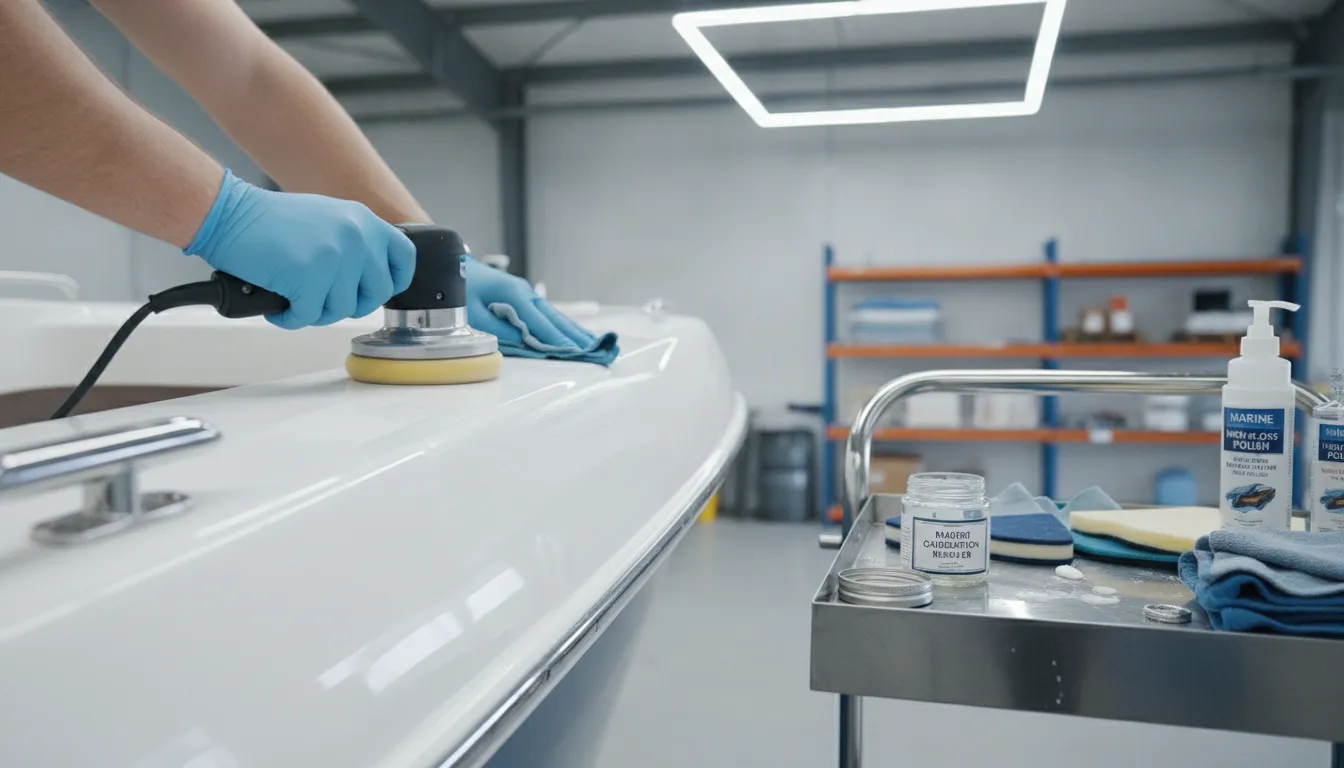
For light oxidation, use a marine cleaner wax or mild polish with a foam pad. An all-in-one cleaner wax can remove minor dullness, revive color, and leave protection in a single step. Apply it with a random orbital polisher, following the product directions and using light, even pressure.
Test the combination in an inconspicuous spot first, then inspect the finish in good light. If the gelcoat still looks chalky, don’t keep polishing the same area without reassessing the product and surface. Dr. Beasley’s boat oxidation guide recommends an all-in-one cleaner wax for light oxidation.
Moderate oxidation: use marine compound, then finer polish
Moderate oxidation may need a marine compound followed by a finer polish. The compound removes more noticeable oxidation; the finishing polish refines the surface and helps restore gloss. Product strength and pad choice affect how much material is removed, so follow label directions and test your approach before working across a larger area.
Some correction methods use a compound with a wool pad and rotary polisher, followed by a foam pad and orbital polisher. This requires careful control and experience. A finishing polish can be especially helpful on darker gelcoat, where haze is easier to see. Keep pads clean, monitor the surface temperature, and stop if the gelcoat becomes hot.
Heavy oxidation: consult a professional before compounding aggressively or wet sanding
Severely faded, rough, or chalky gelcoat may require advanced correction. Aggressive compounding and wet sanding can remove gelcoat, and a mistake may leave visible damage or expose underlying layers. If you’re unsure about the surface condition or how it will respond, get a professional assessment before proceeding.
Heavy correction can involve wet sanding, compounding, polishing, and applying a marine coating. These steps require the right equipment and experience, so avoid learning the process on the whole boat. Dr. Beasley’s guide notes that severe correction is suited to experienced users. For on-site boat and marine cleaning in Hardeeville, ask KD Mobile Rinse and Shine about its services.
Gather a suitable polisher, clean pads, microfiber towels, masking supplies, and PPE
Choose a polisher that matches the job and your experience. A free-spinning random orbital polisher can work for light oxidation. More involved correction may require a gear-driven orbital or rotary polisher, which calls for greater control. Don’t choose a more aggressive machine just to finish faster.
Gather clean pads, microfiber towels, masking tape, and products labeled for marine gelcoat. Replace or clean pads when they become loaded with residue, since fresh pads help keep application consistent. Wear gloves and eye protection, and keep electrical tools away from water. Dr. Beasley’s tool recommendations explain how to match a polisher to the oxidation level. To discuss cleaning your boat at its location, contact KD Mobile Rinse and Shine.
How Do You Prepare to Remove Boat Oxidation and Polish?
Set aside time to clean and dry the boat, protect surfaces that should not be polished, and gather your supplies before starting. A clean, cool work area also makes it easier to apply products evenly and work safely.
Wash, rinse, and dry the boat to remove salt, grit, and grime
Wash the boat with a boat-safe cleaner and clean water. Pay special attention to seams, fittings, and the waterline, where salt and grime can collect. Rinse thoroughly to remove both cleaner and loose grit. Particles left on the gelcoat may drag across it during polishing and leave scratches.
Let the surface dry completely before applying compound or polish. Water around hardware and in seams can mix with the product and make it harder to assess the finish. Dr. Beasley’s guide to boat oxidation also recommends starting with a washed, decontaminated, dry surface. Use clean microfiber towels, and set aside any towel that picks up grit rather than using it on another area.
Work in the shade on a cool surface; mask trim, windows, and hardware
Choose a shaded, well-ventilated spot, and check that the gelcoat feels cool before you begin. Sun and heat can make polishing products dry quickly, which may make them harder to spread and remove. If you cannot shade the whole boat, work on a manageable area at a time and pause if the surface warms up.
Use masking tape to protect trim, window edges, decals, and hardware from compound or polish. This also helps keep product out of seams and other tight spaces. A boating discussion about oxidation removal recommends working in cool, shaded conditions. Choose tape that is suitable for the surface, and remove it carefully once polishing is complete.
Read product labels and safety information; wear eye protection and gloves
Read the label before using a compound or polish. Application methods, recommended pads, working time, and cleanup instructions vary by product. Follow the manufacturer’s directions, and do not mix products unless the label says it is safe. If you are unsure whether a product is suitable for your boat’s finish, test it on a small, inconspicuous area first.
Wear safety glasses to protect your eyes from splashes and residue, and use gloves compatible with the product. Keep the container and its safety information nearby so you can check handling and first-aid guidance if needed. OSHA’s personal protective equipment guidance explains how protective equipment helps reduce exposure to workplace hazards.
Keep electrical tools dry, maintain stable footing, and manage runoff responsibly
Before using an electric polisher, check its cord and plug for damage. Keep the tool and electrical connections away from standing water, and follow the polisher’s operating instructions. Route cords away from walkways and places where they could snag, pull the tool, or affect your balance.
Work from stable footing, especially when reaching across the hull or polishing near the water. Reposition yourself instead of leaning too far. Polishing residue and wash water may carry cleaning products or contaminants, so keep them out of storm drains and waterways. Collect residue where practical, and check product labels and local guidance before rinsing the work area. The EPA’s stormwater guidance explains why runoff should be managed to limit pollutants entering waterways.
How Do You Remove Boat Oxidation and Polish the Finish?
Test the product and pad on a small section
Before polishing the entire boat, choose a small, inconspicuous area to test your product and pad. This lets you see how the gelcoat responds and whether the combination improves its appearance. Follow the product label, use a clean pad, and begin with light pressure. Wipe away residue with a microfiber towel, then inspect the test spot in good light. If the surface looks hazy, scratched, or unchanged, pause and reconsider your approach instead of pressing harder or switching immediately to a stronger compound. A small-area test can help you avoid treating the whole boat with a product or method that does not suit its finish.
Work in manageable sections with steady movement and controlled pressure
Divide the surface into small areas you can polish before the product dries. Apply a modest amount of polish or compound, then move the pad steadily with light, even pressure. Overlap your passes in a crosshatch pattern to cover the section consistently. Avoid lingering over edges, raised features, and areas where the gelcoat may be thinner. When you finish a section, wipe away the residue and check the result before moving on. If oxidation remains, repeat only as directed by the product label. Working this way makes it easier to spot uneven results early and adjust your technique. Dr. Beasley’s boat oxidation guide also recommends working in small areas and inspecting each one as you go.
Compound only as needed; keep the pad clean and the surface cool
Start with the least aggressive product that gives you a noticeable improvement. A mild polish may be enough for light oxidation, while more severe fading may call for a marine compound. Check the pad regularly and clean or replace it when it collects residue. A loaded pad can work unevenly and make it harder to judge your progress. Whenever possible, polish in the shade on a cool surface. Direct sun and heat can make products dry too quickly and complicate application. Pause if the gelcoat feels warm, and follow the product’s instructions for use. Compounding removes a small amount of material, so avoid making repeated passes over an area without checking the finish.
Polish to refine the finish, then inspect it in good light
If you used a compound, check its instructions to see whether a finer polish is recommended afterward. Use a clean finishing pad and steady, controlled passes to refine the surface and reduce any haze left by compounding. Wipe each section with a clean microfiber towel, then inspect it from several angles in bright, even light. Good lighting can reveal dull patches or uneven results that are difficult to see in shade. Check each area before continuing, and avoid assuming that a glossy surface looks uniform from every angle. If you find cracks, deep scratches, or discoloration that remains after polishing, stop and ask a marine detailing professional to assess the gelcoat.
Remove residue before applying a compatible protectant
After polishing, wipe away compound and polish residue with a clean microfiber towel. Check around seams, hardware, and edges where product can collect, and follow the label for any specific cleanup directions. The gelcoat should be clean and dry before you apply protection. Choose a marine wax, sealant, or coating that is compatible with the surface, and apply it according to the manufacturer’s directions. Residue left beneath a protectant can affect how evenly it goes on, so take time to inspect the finish first. This boat oxidation removal demonstration shows the cleanup and inspection steps before protection is applied.
Should You Remove Boat Oxidation Yourself or Hire a Professional?
The best choice depends on the gelcoat’s condition, your polishing experience, and whether you have the right tools and time. A small test spot can help you judge how the surface responds, but extensive correction calls for more care. If you are uncertain, get an experienced opinion before using an aggressive method.
Match the job to your experience, equipment, time, and comfort with polishing
DIY treatment may be a reasonable option when oxidation is light and you already know how to use a polisher. You’ll need products made for marine finishes, clean pads, and enough time to work in small sections and check your results. A mild polish or cleaner wax may be suitable for a lightly faded surface, while deeper oxidation can require several steps.
Be honest about your comfort level. If you have never polished gelcoat, lack the right equipment, or don’t want to risk damaging the finish, hiring a professional may be the better fit. As boat owners discuss in this conversation about restoring oxidized gelcoat, doing the work yourself can cost less, but it takes effort and the right tools.
Ask a professional to assess severe oxidation or uncertain gelcoat condition
If the gelcoat looks heavily faded, feels rough, or stays dull after a careful test, ask a professional to assess it before trying a stronger compound. Get advice as well if you see cracks, deep scratches, or areas where you cannot tell whether the issue is oxidation or other damage. Polishing may improve oxidation, but it won’t repair structural problems or damaged gelcoat.
Treating light oxidation early is generally easier than restoring a surface after years of neglect. A technician can help identify the condition of the finish and suggest a suitable next step. Dr. Beasley’s guide to boat oxidation offers additional information on assessing oxidation and choosing a treatment approach.
Leave extensive correction, rotary polishing, and wet sanding to experienced technicians
Heavy oxidation may call for multiple stages, such as wet sanding, compounding, and polishing. These methods require experience and a controlled touch. Wet sanding can remove gelcoat, while a rotary polisher can create heat or visible marks if handled incorrectly. If you don’t know how much material the finish can safely tolerate, avoid aggressive correction and consult a technician.
Before booking, ask what the work includes and whether the boat needs repair beyond polishing. KD Mobile Rinse and Shine provides on-site boat and marine cleaning in Hardeeville. Contact the team to discuss your boat’s condition and available services, and clarify whether you need routine cleaning or oxidation correction.
How Can You Protect Your Boat’s Finish After Polishing?
Polishing can improve the look of your boat’s gelcoat, but the finish still needs routine care. Apply a suitable protectant, wash away salt and grime, and check for changes in the surface. These simple habits help keep the gelcoat looking its best between professional cleanings.
Apply marine wax, sealant, or a compatible coating as directed
After polishing, apply a marine wax, sealant, or coating that is compatible with your boat’s gelcoat. Polish refines the surface; a protectant adds a layer of defense against sun, moisture, and everyday grime. Follow the product label for surface preparation, application, curing time, and reapplication. Make sure polish residue is removed before applying the protectant.
Products vary in how long their protection lasts. Wax may need more frequent renewal, while some marine coatings are designed to last longer. Dr. Beasley’s guide to boat oxidation notes that gelcoat should be polished before applying wax or a ceramic coating. Choose a product suited to your boat and follow its maintenance instructions.
Rinse off salt and wash away dirt regularly with boat-safe products
Rinse your boat with fresh water after outings to wash away loose salt and grit. Then use a boat-safe soap with a soft mitt or sponge. Clean from top to bottom, and rinse each area before the soap dries. Use clean washing tools so grit doesn’t get dragged across the gelcoat.
Regular, gentle washing helps keep the finish clean and makes it easier to notice dull patches or chalky residue. Avoid household cleaners unless the label confirms they’re safe for marine finishes. Dr. Beasley’s oxidation guidance recommends regular washing and care to help slow oxidation. In Hardeeville, KD Mobile Rinse and Shine offers on-site boat and marine cleaning.
Store the boat under cover or in the shade when practical
When your boat isn’t in use, reduce its exposure to direct sunlight and weather where possible. Store it under a suitable cover, in a garage, or in a shaded area. Choose a clean, well-fitted, breathable cover designed for your boat, and follow the manufacturer’s care instructions. A cover that traps moisture or rubs against the gelcoat can create problems of its own.
Covered or shaded storage won’t prevent oxidation completely, but it can limit exposure to sun, moisture, and airborne debris. If you use a cover outdoors, check that it’s secure and that water doesn’t collect on top. Rinse and dry the boat before covering it, so salt and dirt aren’t left against the finish. Give the covered boat an occasional check, too, especially after heavy rain or windy weather.
Check for renewed dullness and refresh protection on the product’s recommended schedule
Inspect the gelcoat regularly, especially after frequent use or long periods outdoors. Look at the surface in bright, even light for dull, faded, or uneven areas. You can also wipe a clean, dry cloth over the finish to check for chalky residue. Catching these changes early can help you address them before the boat needs more extensive correction.
Refresh wax, sealant, or coating according to its product instructions. The right schedule depends on the product, how often you use the boat, and how it’s stored. If dullness returns quickly, or you notice cracks or other damage, avoid reaching straight for a compound or abrasive treatment. A professional can assess the gelcoat and recommend an appropriate next step. For help with regular boat cleaning in Hardeeville, contact KD Mobile Rinse and Shine.
How Can Mobile Boat Cleaning Support Gelcoat Care in Hardeeville?
Ask KD Mobile Rinse and Shine about on-site boat and marine cleaning
Having your boat cleaned where it’s stored can save you the time and effort of arranging transportation. KD Mobile Rinse and Shine serves Hardeeville with on-site cleaning, including boat and marine services. Before booking, ask what the service includes and confirm that your boat’s location is accessible for the work.
It helps to describe what you’ve noticed on the gelcoat, such as fading, a chalky feel, or uneven color. Share when the boat was last cleaned and how it’s stored, too. These details can help the team understand your needs and explain which services may be appropriate. You can contact KD Mobile Rinse and Shine to discuss your boat and ask about scheduling.
Clarify whether you need routine cleaning or oxidation correction before booking
A dull finish doesn’t always mean a boat needs oxidation correction. Routine cleaning removes surface grime, while oxidation can leave gelcoat faded, rough, or chalky. Tell the service provider what you’re seeing and ask whether the cleaning you’re booking includes any correction work. Don’t assume that a wash will restore an oxidized finish.
If the surface looks heavily faded or you’re unsure of its condition, ask for an assessment before trying a strong compound or sanding it yourself. Aggressive treatment can damage the gelcoat when used incorrectly. This boat oxidation guide explains common signs of oxidation and why addressing it early can make restoration more manageable.
Schedule regular cleaning to remove grime and salt before it builds up
Salt, dirt, and other residue can collect on a boat’s surfaces, so regular washing is a useful part of gelcoat care. Rinse your boat after use when practical, and choose products labeled as safe for marine surfaces. Household cleaners may be too harsh, so check product labels before using them.
How often to clean depends on how frequently you use your boat and where you keep it. Washing and polishing as appropriate can help maintain the finish and slow oxidation, but polishing isn’t necessary every time you wash. Check the gelcoat periodically for renewed dullness or chalky residue, and ask about the right next step if you notice a change. Mobile boat cleaning in Hardeeville can make routine care more convenient by bringing the service to your location.
Frequently Asked Questions
Can washing alone remove boat gelcoat oxidation?\ Washing removes salt, dirt, and grime, but it usually won’t restore gelcoat that has become dull or chalky from oxidation. A suitable polish may help with surface oxidation, while deeper deterioration may need a professional assessment.
How can I tell whether my boat needs polishing or repair?\ Widespread dullness, fading, or chalky residue can point to oxidation. Cracks, chips, deep scratches, or exposed fiberglass may require repair instead. If you’re unsure, have the surface assessed before using an abrasive product.
Can I polish my boat in direct sunlight?\ It’s better to work in the shade on a cool surface. Heat can cause polish or compound to dry too quickly, making it harder to apply evenly and remove. Always follow the product label.
How often should I clean my boat’s gelcoat?\ Cleaning frequency depends on how often you use the boat and how it’s stored. Rinse off salt after outings when practical, and wash with marine-safe products whenever dirt builds up. Check the finish regularly for new dullness or chalky residue.
Does mobile boat cleaning include oxidation removal?\ Service details can vary, so confirm what’s included before booking. KD Mobile Rinse and Shine offers on-site boat and marine cleaning in Hardeeville. Describe the gelcoat’s condition and ask whether the service includes oxidation correction or routine cleaning only.