Driveway Power Washing: A Safe, Step-by-Step Guide
A driveway collects more than parked cars. Leaves, mud, algae, and oil spots can build up until the surface looks tired and may feel slick when wet. Driveway power washing can remove much of this surface grime, but the right method depends on what your driveway is made of and how much wear it has. Too much pressure can pit concrete, disturb pavers, or damage softer asphalt. Before you rent equipment or book a service, learn what the process involves, how to prepare, and what results are realistic. This guide covers safe cleaning steps and when Hardeeville homeowners may want to ask KD Mobile Rinse and Shine about on-site service.
Key Takeaways
- Choose a surface-appropriate method: Concrete, asphalt, and pavers need different pressure and care. Test a small area and follow equipment and detergent instructions.
- Prepare the area before washing: Clear debris, protect plants and nearby surfaces, wear safety gear, and keep dirty water and detergents away from storm drains.
- Expect cleaning, not a like-new finish: Power washing can remove surface grime, but deep-set stains may remain. For on-site service in Hardeeville, ask KD Mobile Rinse and Shine about driveway power washing.
What Is Driveway Power Washing?
Driveway power washing uses pressurized water to remove dirt, mud, algae, and other buildup from concrete, asphalt, or pavers. Depending on the surface and the type of grime, a suitable detergent may help loosen dirt or clean organic growth. The pressure, nozzle, water temperature, and cleaning product all affect the result, so the method should match the driveway’s material and condition.
Power washing can make a driveway look cleaner, but using the wrong technique may damage the surface or nearby landscaping. Knowing how the process works can help you decide whether to tackle the job yourself or ask a local professional, such as KD Mobile Rinse and Shine, about on-site driveway cleaning in Hardeeville.
How water pressure and detergent remove dirt, algae, and grime
Pressurized water helps lift away loose dirt and surface buildup. For stuck-on grime or organic growth, detergent can help break up dirt and treat the area before rinsing. The product should be suitable for the driveway material and used according to its label. Never mix cleaning products, and take care to keep detergent away from plants and other surfaces it could affect.
Detergent is often useful in exterior cleaning because it can help loosen dirt and address mold, as Bob Vila’s power-washing guide explains. Using the right cleaner does not mean every stain will disappear. Oil, rust, and older marks may need a different treatment or may remain visible after washing.
Power washing vs. pressure washing
The terms “power washing” and “pressure washing” are often used interchangeably, but they can refer to equipment with one key difference: power washers typically heat the water, while pressure washers use water at its regular temperature. Heated water may help with certain greasy soils, but routine driveway cleaning does not always require it.
The equipment name matters less than choosing a suitable cleaning method. Pressure that is too high, or a nozzle held too close, can damage some surfaces. The Pressure Dr guide to common pressure-washing mistakes explains why technique matters. Before hiring a cleaner, ask how they will adjust the pressure and protect the driveway and surrounding areas.
How concrete, asphalt, and pavers respond
Concrete can handle a thorough cleaning, but excessive pressure may pit the surface or wear away its top layer. Asphalt is softer and can be more vulnerable to damage from a forceful stream. With pavers, aggressive washing may loosen individual stones or remove material from the joints, particularly if the driveway is already worn or unstable.
The right approach depends on both the material and its condition. Too much pressure can cause cracking, pitting, or surface erosion, while too little may leave embedded dirt or algae behind, according to Becht Pride Cleaning Services. Before cleaning, check for cracks, loose pavers, and worn patches so the method can be adjusted to the surface.
Why Power Wash Your Driveway?
Driveways pick up dust, mud, leaves, and residue from daily use. Damp, shaded spots may also develop algae or other organic growth. A careful wash can remove much of this surface buildup, refresh the driveway’s appearance, and make it easier to notice areas that need repair. The results depend on the surface, its condition, and the type of dirt or staining.
Remove dirt and organic growth to improve curb appeal
Your driveway is one of the first parts of your property visitors see. Dirt, leaf residue, and green or dark growth can make the entrance look untidy, even when the rest of your home is well cared for. Power washing can clear away many surface deposits and refresh concrete, asphalt, or pavers.
Cleaning can be especially useful before guests arrive or as part of routine exterior maintenance. The right approach matters, though: excessive pressure or an unsuitable nozzle can damage some surfaces. A homeowner’s guide to pressure-washing mistakes explains why it’s important to match the technique to the area being cleaned.
Clear slippery algae and grime
Algae and grime can make parts of a driveway slick, particularly when wet. Removing surface buildup may help reduce slip risks for people walking between a parked car, garage, and front door. Check shaded areas and spots that stay damp after rain, since they may be more prone to organic growth.
Power washing can remove some of this grime, but it can’t guarantee that every area will be slip-free. Surface texture, drainage, and the driveway’s condition also affect traction. Learn more about how pressure cleaning can address grime on driveways and walkways, and take extra care around uneven or damaged sections.
Maintain your driveway without overpromising stain removal or property-value gains
Cleaning removes loose dirt and helps you see the driveway’s condition more clearly. Once debris is gone, you may spot cracks, worn areas, or stains that need separate attention. Washing may also be part of preparing a surface for sealing, depending on the material and the sealant’s instructions. Common reasons to pressure wash a driveway include dirt, stains, mold, mildew, and preparation for sealing.
Some marks, including older oil, rust, or deep-set stains, may remain after washing. Results vary by stain and surface, so power washing shouldn’t be treated as a guarantee of complete stain removal or increased property value. For on-site driveway cleaning in Hardeeville, explore KD Mobile Rinse and Shine’s power-washing services.
What Equipment and Detergents Do You Need?
The right equipment can help you clean a driveway evenly while reducing the risk of damaging concrete, asphalt, pavers, landscaping, or nearby surfaces. You don’t need the most powerful pressure washer available. The washer’s pressure, water flow, nozzle, and cleaning solution should suit the driveway material and the buildup you’re treating.
Before you begin, check the driveway for cracks, loose material, and delicate areas. Gather a pressure washer, a suitable nozzle, and a surface cleaner if you have one. Choose detergent labeled for your surface and the type of stain, and keep a garden hose, protective gear, and coverings nearby.
Use each product as directed, and test your setup in a small, inconspicuous area first. High pressure can etch or loosen some surfaces, so more force doesn’t always mean a better clean. Pressure-washing professionals recommend matching pressure to the material, and surface-cleaning guidance advises choosing a nozzle suited to the job. If you prefer to leave the work to a local team, KD Mobile Rinse and Shine provides on-site power washing in Hardeeville.
Choose a pressure washer and nozzle for the surface
Choose a pressure washer based on the driveway’s material, condition, and the kind of buildup you need to remove. A unit with higher pressure isn’t automatically the right choice. Concentrated force can etch concrete, loosen pavers, or harm areas that are already worn.
Start with a wider spray pattern and a lower pressure setting, then test the setup in a discreet spot. Nozzle colors and spray angles can vary by manufacturer, so check your washer’s manual instead of relying on color alone. Keep the wand at a consistent distance and watch for signs of damage as you work. Matching the nozzle to the material can help you clean with more control.
Use a surface cleaner for even coverage
A pressure-washer surface cleaner can make driveway cleaning more uniform than moving a wand back and forth by hand. Its guarded, rotating spray bar covers a wider area at once, which can help reduce visible stripes when you move it steadily across the surface. The guard can also limit splashing compared with an exposed nozzle.
Check that the attachment is compatible with your washer’s pressure and water flow, then follow its instructions. Move at a consistent pace and overlap each pass slightly. Avoid lingering in one spot, since concentrated cleaning can leave marks. Test the surface cleaner on a small area before covering the full driveway. For corners and narrow edges, switch to a suitable nozzle and use a controlled spray.
Match detergent to algae, oil, or grease
Choose a detergent labeled for both your driveway material and the stain you’re treating. A cleaner made for algae may not work the same way on oil or grease. Applying the right product can help loosen buildup before you rinse, so you don’t have to rely on high pressure alone. Bob Vila’s power-washing guidance recommends using an appropriate cleaner for exterior grime and mold.
Read the label to check how to apply the detergent, whether it needs dilution, and how long it should remain on the surface. Keep it away from plants and materials not listed on the label. Stubborn oil, rust, and older stains may not come out completely, even with a suitable cleaner.
Follow product directions and never mix chemicals
Read the labels for your pressure washer, detergent, and any stain treatment before you start. Products vary in where they can be used, how they should be diluted, and how long they need to sit. Follow the directions closely, and use only products approved for your equipment and driveway material.
Never mix cleaning chemicals. Combining products can create hazardous fumes or reactions, even if each one is safe to use on its own. If you’re unsure whether a cleaner is suitable, check the manufacturer’s instructions or contact the product maker. Keep chemicals in their original containers, away from children and pets, and rinse the driveway as directed on the label.
Gather protective gear, a garden hose, and coverings
Wear safety glasses, closed-toe shoes with good traction, and gloves suited to the detergent you’re using. Pressurized water can send grit and debris flying, so keep people and pets away from the work area. Protective gear is essential, particularly when you’re working close to the ground or treating stained areas.
Keep a garden hose nearby to wet plants and rinse surfaces as needed. Use suitable coverings to protect outdoor furniture and other items from splashes, and keep electrical outlets, cords, and equipment dry. Don’t spray directly at doors, windows, vehicles, or delicate landscaping. Check that coverings won’t trap detergent against a surface or create a trip hazard before you begin.
How Should You Prepare Your Driveway?
Good preparation makes driveway power washing easier and helps protect your property. Set aside time to clear the work area, inspect the surface, and plan how you’ll manage water and detergent before turning on the washer.
Move vehicles and clear leaves, dirt, and debris
Move cars, trailers, and other vehicles away from the driveway so they’re out of reach of water, detergent, and debris. Relocate planters, toys, tools, and outdoor furniture from the work area, too. Then sweep or use a leaf blower to clear away leaves, dirt, small stones, and loose gravel. A clean surface makes stains easier to spot and helps you work across the driveway without pushing debris around.
Pay special attention to corners and edges, where leaves and dirt tend to collect. Clearing loose material first is a simple step that can help you get a more even clean. Cleaning professionals recommend removing debris before power washing.
Check for cracks, loose material, stains, and delicate areas
Walk the driveway before washing and look for cracks, chipped edges, crumbling concrete, loose pavers, or worn coatings. High-pressure water can worsen existing damage, so don’t direct a concentrated spray at fragile spots. If the surface is badly deteriorated, ask a professional to assess it before you begin.
Note stains such as oil, rust, and algae. They may need different cleaning methods, and some deep-set marks may remain after washing. Also identify nearby areas that could be damaged by direct spray, including garden borders, painted surfaces, and wood trim. Using pressure suited to the surface can help reduce the risk of pitting and erosion.
Wet nearby plants and protect outlets, doors, and vehicles
Move potted plants out of the work area if possible. Before applying detergent, wet nearby plants with clean water, then rinse them again if they’re exposed to overspray. Move or cover outdoor furniture and other items that could be affected by cleaning products or dirty water.
Close windows and garage doors, and keep spray away from electrical outlets, light fixtures, and door gaps. Check that vehicles and neighboring property are protected, too. Choose a detergent labeled for your driveway material and follow its instructions for use. Bob Vila’s power-washing advice also emphasizes selecting an appropriate cleaner and preparing the area before washing.
Check the weather, detergent directions, and local runoff rules
Check the forecast and choose a time when rain is not likely to interrupt the work or carry detergent into unwanted areas. On hot, sunny days, cleaning products may dry quickly, so read the label for the recommended application method and dwell time. Follow those directions, and never mix detergents or other chemicals.
Before you start, note where water will flow off the driveway. Keep detergent and dirty runoff away from storm drains, waterways, and neighboring property. Requirements can vary by location, so check local guidance if you’re unsure how to manage runoff. If you’d rather leave the work to a local professional, ask KD Mobile Rinse and Shine about on-site driveway power washing in Hardeeville.
How Do You Power Wash Your Driveway Safely?
A careful approach can clean your driveway while reducing the risk of surface damage, chemical exposure, and runoff problems. Work in manageable sections, follow the pressure washer and detergent instructions, and stop if the surface starts to chip, etch, or shed material.
Pre-treat stains and follow the detergent’s dwell time
Sweep away leaves, loose gravel, and other debris before washing. For oil or grease spots, choose a cleaner labeled for your driveway material. Apply it as directed and leave it on for the recommended dwell time so it can loosen grime. Don’t let the product dry on the surface. In warm or sunny weather, work on smaller sections and rinse each one promptly.
Check the label before using any cleaner, and never mix products. A degreaser made for concrete may not be suitable for asphalt, pavers, nearby plants, or other surfaces. For more tips on preparing a driveway and treating stains, read Becht Pride Cleaning Services’ power-washing guide.
Start with low pressure and test an inconspicuous area
Choose a nozzle and pressure setting suited to your driveway material, then test the spray on a small, less-visible area. Hold the nozzle at a consistent distance and increase pressure only if the test spot remains undamaged and the spray isn’t removing material. Avoid aiming directly at cracks, joints, or loose sections.
Concrete, asphalt, and pavers can respond differently to water pressure. If you’re unsure what your driveway can handle, check the surface-care and equipment instructions before you begin. Excessive pressure can damage surfaces, as Sparkle Wash explains in its guide to common pressure-washing mistakes.
Make steady, overlapping passes at a safe nozzle distance
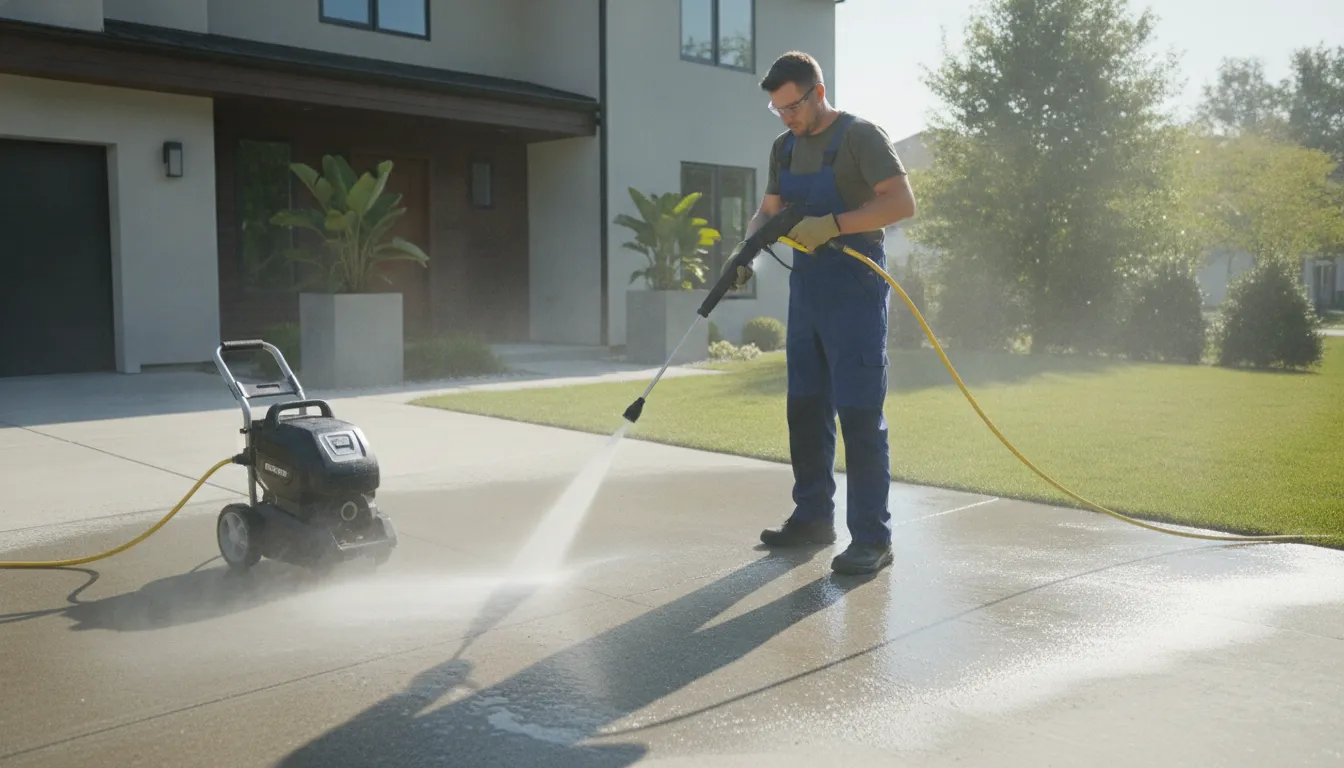
Keep the nozzle moving and hold it at a consistent distance from the driveway. Clean in straight, controlled passes, overlapping each one slightly to help avoid missed strips. Move slowly enough to lift dirt, but don’t linger in one spot. Holding the nozzle too close or staying in one place can leave marks or damage the surface.
If you’re using a surface cleaner, follow its instructions and move it at an even pace. When practical, start near the driveway’s highest point so water can flow downhill as you work. This driveway-cleaning demonstration illustrates why steady movement and even coverage help reduce visible lines.
Rinse thoroughly and direct runoff responsibly
Rinse away loosened dirt and detergent before they dry. Work from the upper part of the driveway toward a suitable drainage area, directing spray away from doors, garages, and neighboring property. Don’t let detergent, oily residue, or dirty wash water flow into storm drains or planting beds. Check local guidance for outdoor-cleaning runoff and follow the detergent label’s disposal instructions.
On a large driveway or in warm weather, rinse each section as you go to keep residue from drying on the surface. Use a garden hose or the washer’s appropriate rinse setting, then check for remaining suds or cleaner before moving on. If runoff is reaching an area where it shouldn’t, pause and adjust your approach.
Let the surface dry before replacing vehicles
After the final rinse, keep vehicles, foot traffic, and outdoor items off the driveway until it has dried. Drying time varies with the surface material, shade, temperature, and weather, so check the driveway rather than relying on a fixed wait. Keeping the area clear also gives you a chance to inspect the finish before parking or putting items back.
Once the surface is dry, look for uneven areas, remaining stains, or signs of damage. Old oil, rust, and deeply set marks may remain after washing. If your driveway needs specialized equipment or careful treatment, contact KD Mobile Rinse and Shine to ask about on-site power washing in Hardeeville, South Carolina.
What Power Washing Mistakes Should You Avoid?
A clean driveway depends on more than a powerful machine. The wrong pressure, nozzle, or detergent can damage the surface and surrounding areas. Prepare carefully, test your setup, and follow product directions before washing.
Using too much pressure or holding the nozzle too close
High pressure may seem like a fast way to remove grime, but it can etch concrete, loosen surface material, or damage asphalt and pavers. Holding the nozzle too close concentrates the force in one spot and may leave visible marks.
Start with a low setting and test an inconspicuous area. Keep the nozzle moving at a steady pace and maintain a consistent distance from the driveway. If the dirt does not lift, do not immediately increase the pressure. Try a suitable detergent or surface-cleaner attachment instead. Excessive pressure can damage many surfaces, including paint, siding, and wood, so use extra care around the edges of the driveway and nearby structures.
Choosing the wrong nozzle or skipping stain pre-treatment
Nozzles shape the water stream. A narrow nozzle can concentrate pressure on a small area, increasing the chance of marks or surface damage. Choose one that suits the driveway material and cleaning task, then test it before washing a larger area. A surface cleaner can help create more even coverage across a broad driveway.
Treat oil and grease spots before washing instead of expecting water alone to remove them. Clear loose debris, apply a cleaner labeled for the stain and surface, and follow its instructions. Matching the nozzle to the material can help prevent damage. Avoid repeatedly spraying one spot, since that can leave an uneven finish.
Letting detergent dry or using incompatible products
Detergent can loosen grime and organic growth, but it needs to be used according to its label. Apply it to manageable sections and follow the recommended dwell time. If it begins to dry before you rinse, it may leave residue or become harder to remove. Work in smaller areas or choose cooler conditions to help keep the product wet.
Select a detergent labeled for both your driveway material and the type of stain you are treating. A cleaner made for concrete may not be appropriate for asphalt, pavers, nearby plants, or painted surfaces. Use only the recommended amount, rinse thoroughly, and never mix cleaning products. Choosing an appropriate detergent can help loosen dirt, but using it as directed is just as important.
Overlooking protective gear, plants, or runoff
Wear closed-toe shoes, eye protection, and gloves when using a power washer or handling detergent. The spray can send grit back toward you, and some cleaning products may irritate skin or eyes. Keep children and pets away from the work area, and never point the wand at people, animals, or electrical equipment.
Before washing, wet nearby plants and cover delicate landscaping if needed. Shield outlets, doors, and other vulnerable areas from spray. Plan where water will drain, and avoid directing detergent or dirty runoff toward storm drains, waterways, or neighboring property. Check product labels and local requirements before starting. If you prefer to leave the equipment and cleanup to a crew, KD Mobile Rinse and Shine provides on-site power washing in Hardeeville, South Carolina.
What Results Can You Expect?
Power washing can remove built-up dirt, algae, and grime, leaving many driveways looking cleaner and brighter. The result depends on the surface, its condition, and the type of stain. A clean driveway may still show signs of age or previous damage, so set realistic expectations and assess the finish once it has dried.
Assess the finish after the driveway dries
A wet driveway can look darker and more even than it will when dry. After rinsing, let the surface dry completely, then check it in good light for missed areas, remaining buildup, or uneven coloring. If you spot a problem, don’t immediately repeat the wash at higher pressure. The difference may come from wear or discoloration, not dirt. Some areas may need a targeted treatment suited to the stain and surface. For on-site driveway power washing in Hardeeville, KD Mobile Rinse and Shine can discuss your driveway’s condition and cleaning needs.
Know that older oil, rust, and deep-set stains may remain
Power washing can improve a driveway’s appearance, but it may not remove every mark. Older oil, rust, and stains that have penetrated the surface can remain visible after cleaning. In many cases, the goal is to clear surface grime and brighten the area, not make aged pavement look new. Some marks may need a cleaner designed for that specific stain and material; others may reflect lasting discoloration. Avoid repeatedly applying stronger chemicals or concentrated pressure to one spot, as this can damage the surrounding surface. A driveway-cleaning demonstration also notes that some stains can remain after much of the visible grime is removed.
Expect results to vary by surface, stain, and driveway condition
Concrete, asphalt, and pavers respond differently to pressure and cleaning products. The driveway’s age, cracks, previous repairs, and type of buildup can all affect the final appearance. A setting that suits sound concrete may be too aggressive for a damaged or more delicate area. Different stains may also call for different cleaning methods, so one approach may not deliver an even result across the whole driveway. Test an inconspicuous spot first and adjust carefully. This guide to driveway pressure washing recommends considering both the surface material and the severity of the stains.
Sweep regularly, clean spills promptly, and repair cracks
Simple upkeep can help your driveway stay cleaner between washes. Sweep or use a leaf blower to clear leaves, dirt, and loose debris before they build up. Clean oil and other spills promptly with a product labeled for the stain and driveway material. Check for cracks or loose sections, too. Pressure washing can worsen existing damage if the surface is unstable, so address repairs as needed before cleaning. Regularly clearing debris also makes it easier to spot new stains and areas that need attention. Before washing, remove loose debris so it won’t interfere with the cleaning process.
Wash as needed and seal only when conditions and the surface allow
How often to wash depends on shade, drainage, vehicle traffic, and how quickly algae or grime returns. Inspect your driveway and clean it when buildup becomes noticeable rather than following a fixed schedule. In Hardeeville’s warm, humid climate, shaded or damp areas may need attention sooner. Sealing is a separate step and is not appropriate for every driveway. Check the product label for surface compatibility, preparation, temperature, and drying requirements. The surface should be clean and fully dry before sealing, with needed repairs completed first. This professional concrete-cleaning advice recommends basing cleaning and sealing decisions on the surface and conditions.
When Should You Hire a Driveway Power Washing Professional?
A professional may be a practical choice when your driveway is large, has stubborn buildup, or needs careful cleaning. Before you decide, weigh the time and equipment a DIY job requires against the cost of hiring help. Ask questions about the cleaning process, surface protection, and what the price covers so you know what to expect.
Hire a professional for large, heavily stained, or delicate driveways
Cleaning a large driveway evenly can take several hours, especially when dirt, algae, or grime has built up over time. Professional help may also make sense for older concrete, asphalt, or pavers that need a careful approach. Too much pressure or a nozzle held too close can mark a surface or loosen material. The PressureD guide to common pressure washing mistakes explains how technique can affect results and potentially lead to repairs.
If your driveway has oil, rust, or deep-set stains, ask what improvement is realistic before the work begins. Cleaning can refresh the overall appearance, but some stains may remain, depending on their age and the driveway’s condition.
Compare DIY equipment costs, time, water use, and damage risks
A DIY job involves more than renting or buying a pressure washer. Include the cost of detergent and attachments, as well as the time needed to prepare, clean, and rinse the driveway. You’ll also need to choose suitable equipment and learn how to use it without damaging the surface. Think about water use, too, particularly if the driveway is large.
Compare those costs with a professional estimate. Bob Vila’s guide to driveway pressure washing costs provides a national range, but local prices can vary based on driveway size, condition, and the work involved. Ask whether the quote includes pretreatment, rinsing, and cleanup so you can compare services fairly.
Ask about experience, insurance, methods, detergents, and written pricing
Ask whether the provider has cleaned your type of driveway and how they plan to address its specific stains. Find out what equipment and detergents they use, whether they test an inconspicuous area first, and how they’ll protect nearby surfaces. You can also request proof of insurance and a written estimate that lists the work included, possible additional charges, and expected results.
A provider should be able to explain their approach clearly. Sparkle Wash’s advice on avoiding pressure washing mistakes emphasizes using suitable methods and solutions for the surface. Ask how the team will handle your driveway’s material and any delicate areas before scheduling.
Confirm scheduling, landscaping protection, and runoff practices
Ask how long the job may take and whether you need to move vehicles or clear the driveway beforehand. Confirm how the crew will protect nearby plants, doors, outlets, and other surfaces. If detergents will be used, ask how they’re applied and rinsed, and what precautions the team takes around landscaping.
Check where the wash water will go and how the provider handles runoff. Practices may depend on your property’s layout and local requirements, so ask for a clear explanation. Confirm whether the crew needs access to an outdoor water source, and whether rain or other weather conditions could change the appointment. Getting these details in advance helps you prepare the area and understand what will happen on service day.
Ask KD Mobile Rinse and Shine about on-site driveway power washing in Hardeeville, South Carolina
If you’re in Hardeeville, contact KD Mobile Rinse and Shine to ask about on-site driveway power washing. Share the surface type, approximate size, and any areas with heavy buildup or stains. Photos may help the team understand the condition of the driveway before discussing the job.
Ask what the service includes, how long it may take, and whether you should move vehicles or prepare the area. You can also review the company’s power washing services to learn about its exterior cleaning options. Confirming the details ahead of time helps you plan for the appointment and understand what results to expect.
Related Articles
- Top 5 Things to Avoid When Power Washing Your Driveway
- 11 Mistakes Most People Make With a Power Washer
- Pressure Washing Mistakes Homeowners Make and How to Avoid Them
- How Pressure Washing Enhances Curb Appeal and Property Value
- Cost to Pressure Wash Driveway
Frequently Asked Questions
How often should I power wash my driveway?\ There’s no fixed schedule. Check your driveway for dirt, algae, and grime, and clean it when buildup becomes noticeable. Shaded or damp spots may need attention sooner.
Can power washing remove oil and rust stains?\ It may lighten some stains, but older oil, rust, and deep-set marks can remain. Results depend on the stain and driveway surface. Use a cleaner made for both the stain and material, and follow its label.
Is it safe to power wash asphalt or pavers?\ It can be, if the method suits the surface and its condition. Asphalt may be more vulnerable to forceful spray, while high pressure can loosen pavers or joint material. Test a small area first, or consult a professional if the driveway is worn or unstable.
When can I park on my driveway after washing?\ Wait until the driveway is fully dry before moving vehicles back. Drying time varies with the surface, shade, temperature, and weather.
Does KD Mobile Rinse and Shine clean driveways in Hardeeville?\ KD Mobile Rinse and Shine offers on-site power-washing services in Hardeeville, South Carolina. Contact the team to ask about your driveway’s material, size, and cleaning needs.