
How to Remove Pet Hair from Car Seats and Carpet
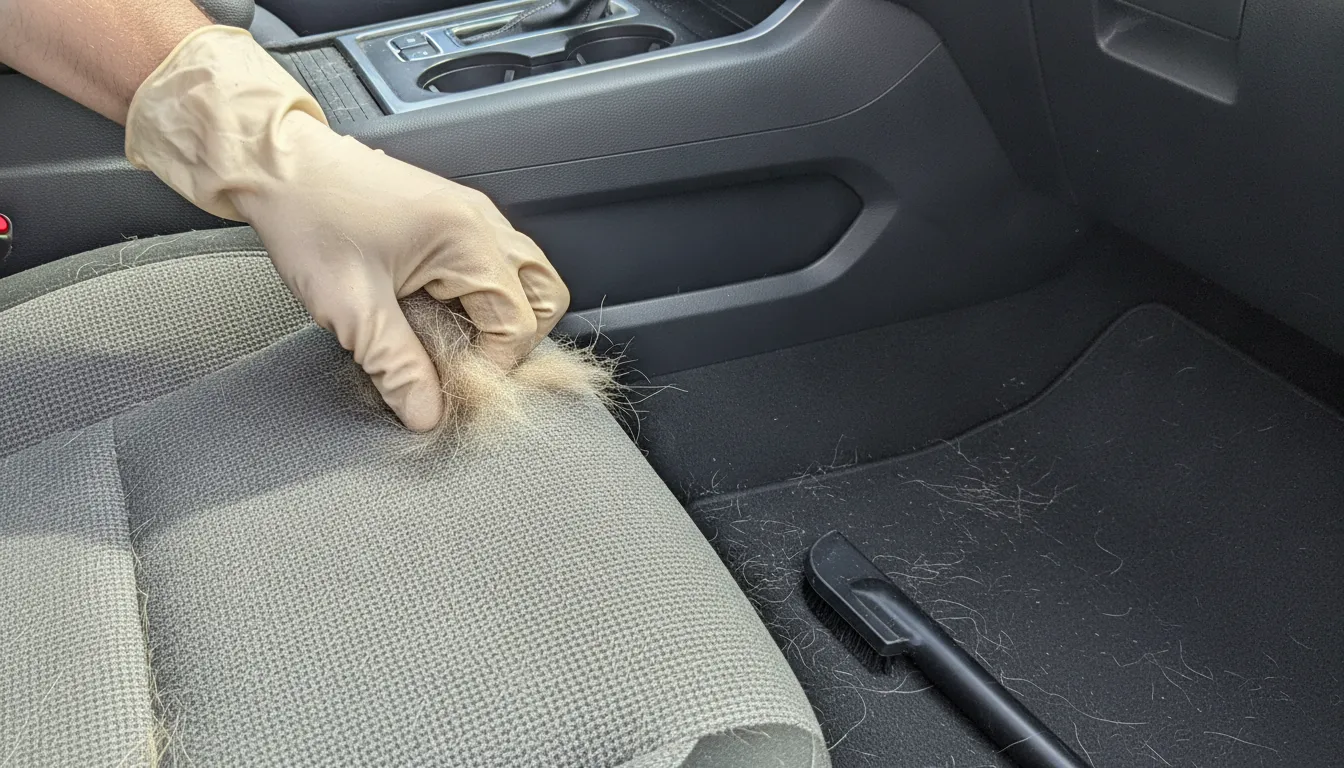
Pet hair clings to cloth seats and carpet because static and the weave grip individual strands. A vacuum alone often glides across hairs that are already woven in. If you want to know how to remove pet hair from car seats and carpet, clear the cabin first, then work one surface at a time.
Vacuum loose fur, drag a damp rubber glove or squeegee in one direction, then vacuum again. Finish stray hairs with a lint roller. This is a surface cleanup, not a guarantee that every embedded fiber will release. Work in the shade with the doors open so you can see the weave and keep airflow moving. Test any spray on a hidden spot first, and stop immediately if the fabric pills, the color shifts, or a smooth surface starts to look dull.
Describe the seats, the carpet, and where the vehicle is parked, then request a free quote.
How to Remove Pet Hair from Car Seats and Carpet
Use this order. Skipping ahead usually pushes hair deeper or spreads it onto seats you already cleared.
- Take out the floor mats, blankets, seat covers, and any other loose items before you vacuum. Shake mats outside, away from the open doors.
- Vacuum the loose hair from the top down, starting with headrests, seat backs, cushions, and bolsters before you move to the carpet and footwells.
- On cloth, drag a slightly damp rubber glove or a rubber squeegee in one direction until the hair rolls into a visible ridge. Pick those clumps up before you move to the next panel.
- Use a soft brush only along the seams and the seat tracks, where a wider tool cannot reach. Do not scrape leather, vinyl, or suede with rubber tools, because friction can dull those finishes.
- Vacuum the surface again, then roll a lint roller or a loop of packing tape over the last remaining hairs.
- Let any damp spot dry with the doors open before you put the mats back in place.
One careful pass outperforms three hurried ones. A heavily coated cloth seat can take 10 to 20 minutes. If hair remains locked in after two glove passes and a second vacuum, further scrubbing is unlikely to help. Stop there and decide whether the remaining hair is worth asking someone else to assess.
Set up before you touch the seats. Park out of direct sun so any light mist does not dry into a visible spot. Open the doors so you have both light and airflow while you work. Put a towel on the ground before you shake a mat, and point the mat away from the open cabin. Have a trash bag ready for the clumps before you start the glove pass. Hair you drop beside the car is easy to walk back into the cabin on your shoes.
Which Tool Fits Each Surface
Match each tool to the material you are actually cleaning. A method that works well on carpet can leave a mark on a smooth seat. Read the matching row, then stop at the first warning that matches what you see on the surface.
| Surface | Tool that helps | Stop if |
|---|---|---|
| Cloth seats. | Use a damp rubber glove in one direction, then vacuum. | Stop if the weave pills or threads pull up. |
| Carpet and carpeted mats. | Use a rubber squeegee or glove, then vacuum. | Stop if the backing stays wet. |
| Seams and tracks. | Use a crevice tool, then a soft brush. | Stop if you have to force the tool. |
| Leather or vinyl. | Use a vacuum brush only, then a dry microfiber cloth. | Stop if the surface looks hazy or scratched. |
| Light leftover hairs. | Use a lint roller or packing tape. | Stop if adhesive stays on the fabric. |
Rubber works because friction draws hair out of the weave and gathers it into clumps you can lift. Keep the rubber glove barely damp rather than wet. A soaking glove drives moisture into the foam beneath the cloth, and that dampness can linger. Re-dampen the glove as soon as it stops grabbing the hair. On open carpet, a squeegee covers more ground than a glove. On a seat bolster, the glove gives you more control than a wide squeegee.
Do not use a wire brush or a pumice stone on seats, because those tools can cut threads. Some people use pumice on a rubber all-weather mat, but that stone is a poor choice for cloth, the face of the carpet, or leather. Skip it if you are unsure whether the surface is cloth, coated fabric, or leather. A soft brush is appropriate only for seams, stitching, and the dusty edge of a track.
Cloth seats
Vacuum in overlapping strokes rather than quick flicks. Start at the headrest, move down the seat back, and then work across the cushion in overlapping rows. Use the upholstery tool on flat cloth and the crevice tool anywhere the wider head will not fit. Slow passes collect more hair than three rushed ones. Empty the canister or change the bag as soon as the suction drops. A packed canister mostly redistributes hair instead of removing it.
After the first vacuum, look at the cloth in daylight from a low side angle. Hair that still catches the light across the weave is embedded, and that is what the glove is for. Press firmly enough to feel the fabric, but not so hard that you grind loose grit into it. Grit trapped under a dry glove can fuzz the cloth. If the seat still feels sandy, vacuum it again before you rub the glove across it.
Work one seat panel at a time so loose hair does not travel. Drag from the outer bolster toward the center, lift the ridge of hair, and only then start the next band. Change direction only after that band is clear, or you will drag loose hair back across it. On a bench seat, repeat that pattern from each outside edge toward the middle. Vacuum that area before you sit back down, or your weight will press the loose ridge into the cloth again.
Carpet and mats
Pull the carpeted mats out and clean them on the towel, not inside the footwell where hair can fall back down. Beat a carpeted mat gently, squeegee it in one direction, and then vacuum what the squeegee released. A rubber mat can be rinsed if the label allows water, then dried fully before it goes back into the footwell. On the carpet that stays in the car, work toward the door so the ridge of hair ends where you can pick it up without stepping through it. Then vacuum that strip of carpet before you step back onto it.
Slide the seats fully forward and then fully back so you can reach the carpet that was covered. Hair packs into a line where the cushion meets the seat back, and it packs again underneath the seat rails. If you removed a child seat, vacuum the exposed anchors and the carpet those anchors covered. Do not soak those anchors while you are cleaning around them. Water in a latch can remain there long after the cabin looks dry to the eye.
What About Vinegar, Dish Soap, and Gloves
People also ask whether a pet-hair glove actually works, whether vinegar dissolves hair, and whether dish soap belongs on vehicle seats. The short answers are in the sections below. None of these shortcuts replaces the vacuum followed by the rubber pass.
Does a rubber glove really lift hair?
Yes, it works on most cloth seats and on most vehicle carpet. A plain rubber cleaning glove is sufficient for that job. Dampen it slightly, drag in straight lines, and lift the ridge of hair before you change direction. Circular strokes smear hair around instead of gathering it. A dedicated rubber-bristle pet brush can reach a tighter weave, but it is optional rather than required. Neither tool belongs on leather or vinyl surfaces. Those surfaces need the vacuum brush and a dry cloth, not rubber friction that can haze the finish.
Does vinegar dissolve pet hair?
No. Hair is keratin, and household vinegar does not dissolve that protein. A light mist of water can reduce static so hair releases from the fabric more easily. Vinegar is sometimes used, heavily diluted, on household laundry when the goal is odor or residue. It is not a hair remover, and it does not belong on leather upholstery. If you mist anything in the car, use plain water, use very little, and test a hidden spot first. The American Cleaning Institute notes that vinegar is a mild acid used for some mineral deposits and odors, not a solvent for hair or a substitute for the cleaner a surface calls for. See their overview of fabric care and laundry basics before you treat a seat like a wash load.
Can you use dish soap on car upholstery?
Dish soap is a poor default for seats and carpet. It is formulated to cut grease, and leftover soap can attract dirt. It also will not extract hair that is already embedded in a weave. Use the vacuum, glove, and lint roller first. If a separate stain remains after the hair is gone, that is a different job. Use a cleaner labeled for that specific upholstery and follow the label exactly. Do not mix different cleaners, and do not soak the cushion while you experiment. This guide does not cover stain removal or odor treatment.
Where Hair Hides After the First Pass
The middle of the cushion is the straightforward part. Hair that transfers back onto clothing usually hides along the edges. Check these spots before you decide the cabin is finished.
- Run the crevice tool along the seat-rail gap, along the center-console edge, and underneath the seat.
- Check the headrest posts, the seat-belt receptacles, and the fold where a bench seat hinges.
- Look at the back of the front seats, where hair rubs off as people climb into the rear.
- Wipe the door pockets and the ledge at the bottom of each door with a dry microfiber cloth. Do not soak plastic switches or electronic controls.
- If a pet rides in the cargo area, treat that carpet the same way and let any damp mat dry outside the vehicle.
Do the carpet last if you are also cleaning the seats. Hair you loosen higher in the cabin falls downward onto the carpet you have not finished. A final vacuum from the seats toward the footwells picks up the hair the glove released. Then use the lint roller only for the stray hairs the vacuum missed. Tape and a roller are a finishing step, not a method for clearing a buried mat of fur.
Put the mats back only when both the mats and the footwell are fully dry. A damp mat laid over damp carpet traps fresh dirt. If you used a mist, leave the doors open until the cloth feels dry against the back of your hand. Do not close the cabin over damp seats in order to hurry the drying.
A cover or blanket helps between cleanings when your pet rides in the vehicle often. Shake it outside, away from the open door, and wash it according to its own care label. The cover does not remove hair that is already embedded in the seat. It only gives the next round of shedding somewhere else to land.
What a Careful DIY Pass Still Cannot Fix
This method lifts loose and lightly embedded hair. It does not restore the cabin. Read the limits before you keep scrubbing a spot that is no longer changing.
- Hair pounded into the foam under a worn cloth seat may remain after two careful passes.
- Odors, urine spots, and ground-in stains are a different job from hair removal. Removing the hair does not treat those problems.
- Soaking a seat in an attempt to loosen fur can leave the padding damp underneath.
- Scraping leather, suede, or a coated fabric can dull the finish or scratch it.
- A cleared cabin will collect fresh hair the next time a pet rides along. A seat cover or blanket limits how much new hair reaches the cloth. It does not replace a regular vacuum pass.
If the weave is already pilling, or you are concerned about a light interior, stop. Additional glove passes will not restore threads that have already pulled. Washing the paint, using a clay bar, and waxing are also a different job. Those exterior steps do not extract hair from a seat. Keep those exterior steps out of this cleanup.
A useful final check is straightforward. Sit in the seat in daylight and look across the cloth from a low side angle. Run a dry hand over the cushion and then over the carpet beside the door. If loose hair still lifts onto your palm, make one more vacuum and roller pass on that panel only. If the hair is still locked deep in the weave, the do-it-yourself method has reached its practical limit.
When to Ask for On-Site Help in Hardeeville
Ask for help when the hair is still embedded after you have already made a real attempt. Ask again when several rows are affected, or when you would rather not scrub the seats yourself at home. KD Mobile Rinse and Shine offers mobile auto detailing at your location in Hardeeville. What is confirmed is vehicle cleaning and polishing brought to the vehicle. Pet-hair removal is not listed as its own service, so ask whether the specific job you have in mind is appropriate. Do not treat this article as a promise that hair removal is already part of the visit.
A useful quote request names the vehicle, whether the seats are cloth or leather, how much hair remains, and whether you also want the exterior cleaned. Say where the vehicle will be parked in Hardeeville, including any parking or access limits. Ask KD to confirm what the visit would include before you expect anyone to come out. There is no published price on this page and no instant booking. A message is an inquiry, not a confirmed appointment.
For a broader look at how an on-site visit is arranged, read what mobile auto detailing in Hardeeville includes. That page explains how to arrange the visit. It is not a step-by-step pet-hair tutorial. You can also review the cleaning and quote questions before you send a message. The useful details to include are the seat material, how much hair remains, and the parking location.
When the rubber glove and the vacuum are not enough, request a free quote or call 443-239-1200 and ask whether this cleanup fits the vehicle.
Frequently Asked Questions
How do I remove pet hair from car seats and carpet without a shop vacuum on hand?
A household vacuum with a crevice tool still helps if you loosen the embedded hair first. Drag a damp rubber glove across the cloth and carpet, pick up the clumps by hand, and then vacuum. A lint roller catches the remaining stray hairs. You will work more slowly than with an upholstery tool, and deeply buried hair may remain.
Will a pet hair glove work better than an ordinary rubber cleaning glove?
Both tools rely on rubber friction against the weave. A textured pet glove or rubber-bristle brush can grip a tight weave that a smooth glove skims over. Use either tool while it is slightly damp, move in one direction, and vacuum afterward. Neither tool belongs on leather upholstery.
Does vinegar dissolve dog or cat hair once it is stuck in a car?
No. Household vinegar does not dissolve pet hair. Water reduces static, which can make the hair easier to lift with a rubber glove. Keep any liquid light, keep it off leather, and test a hidden spot before you continue.
How often should I clear pet hair if my dog rides along most weeks?
If a pet rides most weeks, a short vacuum and glove pass every few weeks keeps hair from compacting into the weave. A seat cover or blanket reduces the amount of new hair that lands on the cloth. It will not stop shedding, and it will not extract hair that is already embedded in the weave.
Can KD remove pet hair from a vehicle parked at my home in Hardeeville?
You can ask before you assume the work is available. KD Mobile Rinse and Shine brings vehicle cleaning and polishing to the parked vehicle in Hardeeville. Pet-hair removal is not listed as a separate service, so describe the vehicle, the seat material, the amount of hair, and the parking location, then ask whether that work fits.
Request a Free Quote
If the seats and carpet need more than a glove and a vacuum, tell KD Mobile Rinse and Shine exactly what you are dealing with. Share the vehicle type, whether the seats are cloth or leather, how much pet hair remains, and the Hardeeville location where the vehicle will be parked.
Call 443-239-1200 or send the details through the quote form. Ask KD to confirm whether an on-site cleaning visit is appropriate for the job. There is no instant price, and this page does not complete a booking.