How to Remove Sap from a Car Without Damaging the Paint
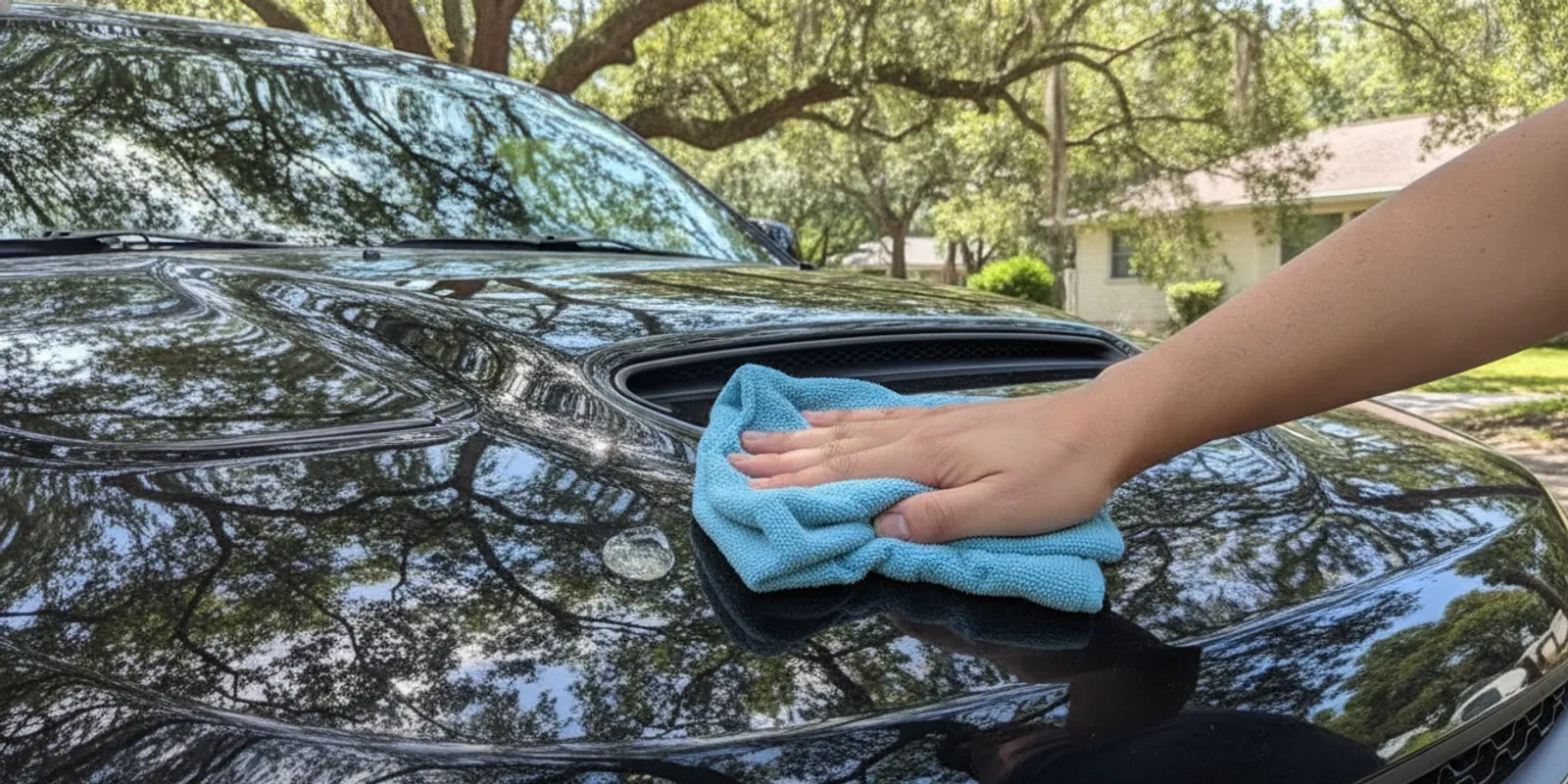
Tree sap can cling to a car’s paint and become harder to lift as it dries. If you are wondering how to remove sap from car paint without adding scratches, start with the gentlest method and work slowly. Avoid scraping or rubbing a dry spot. The aim is to soften the residue so it can be lifted without grinding grit across the finish.
What should you do before cleaning sap?
Choose a shaded, cool place to work. A hot panel can make cleaners evaporate quickly and can be uncomfortable to handle. If the paint is warm, wait for it to cool. Gather clean water, automotive wash soap, a soft wash mitt or microfiber cloth, and a separate clean microfiber towel. Use a product labeled for automotive paint if you need a sap remover; follow its label carefully.
First look closely at the spot. Note whether it is a small fresh drop, a hardened blob, or a larger patch. Check for grit, leaves, or other debris nearby. Do not rub over dirt. If the area is dusty, rinse it before bringing a cloth close to the paint. A quick look also helps you notice whether the paint is already chipped, cracked, or damaged.
- Work on cool paint, away from direct sun when possible.
- Use clean cloths and soft materials made for vehicle surfaces.
- Keep the sap remover on the affected area rather than spreading it across the panel.
- Test a product on a small, inconspicuous painted area first, following its label.
- Stop if the finish changes, the spot resists gentle cleaning, or you are unsure what the surface is made of.
How do you remove fresh tree sap from car paint?
Fresh sap is often easier to address than a hardened deposit, but it still needs a light touch. Start with a normal wash so loose dirt does not become abrasive. Do not try to wipe the sap away with a dry towel.
- Rinse the area. Use clean water to wash away loose dust and grit around the sap. Let the water run over the spot rather than directing a forceful stream at it.
- Wash gently. Use automotive wash soap and a clean, soft mitt. Clean the surrounding area with light pressure, then rinse. Do not scrub directly at sticky residue.
- Soften the sap. If it remains, use a paint-safe sap remover according to its label. Apply only as directed. Give it the stated contact time; do not let the product dry on the paint.
- Lift rather than scrape. With a clean, soft microfiber cloth, gently dab or wipe the loosened residue. Use a fresh section of cloth as needed. Avoid fingernails, blades, plastic scrapers, abrasive pads, and gritty paper towels.
- Rinse and inspect. Wash off remaining product as directed and check the spot in good light. If sap remains, do not increase pressure. Repeat only if the product label allows it and the finish looks unchanged.
Use separate cloths for the dirty first wash and the final wipe. If a cloth picks up sap or debris, switch to a clean one rather than dragging it across the panel. Gentle, repeated softening is safer than trying to remove the deposit in one forceful pass.
Keep the cleaning area controlled
When the spot is small, focus treatment on the residue rather than wetting a large section with cleaner. This makes it easier to see what is changing and limits unnecessary product contact. If sap has run down a panel, treat each visible area gently instead of wiping the whole trail in one stroke. Rinse between attempts when the product instructions call for it.
Keep your clean and used towels separate. A towel that has touched the ground, wheel, or dirty lower panel should not return to the paint around the sap. If you drop a cloth, set it aside for laundering. This simple separation reduces the chance that trapped grit will be carried back onto a clean surface.
What if the sap has dried or hardened?
Dried sap may need more time to soften. Do not pick at a hard lump or try to chip it off. Start with a rinse and wash to clear dirt, then apply an automotive paint-safe remover according to its instructions. If the label permits, allow the product to work for its specified time and gently blot the spot with a clean microfiber cloth.
Some products are intended for a short contact period, and some surfaces may have special restrictions. Read the label before use and do not mix cleaners. Avoid household solvents, strong chemicals, abrasive compounds, and improvised tools unless the product maker specifically says they are safe for the surface. A method that seems effective on glass or metal may not be appropriate for painted bodywork, plastic trim, or a vehicle with a specialty finish.
After each gentle attempt, rinse as directed and inspect the area. If there is a raised residue that will not soften, a dull patch, discoloration, or any sign that the paint is changing, stop. Further rubbing may spread the damage. A professional can assess the residue and the surface before choosing a next step.
Why patience matters with hardened spots
A hardened deposit may feel like a solid bump, which can tempt you to use a fingernail or an edge to get underneath it. Resist that urge. The contact point is small, so pressure is concentrated in one place and can leave a mark. Allowing an appropriate product to soften the material is a more controlled approach, but it is not a reason to leave the product on longer than its label says.
Do not try several different products one after another without rinsing and checking the surface. Mixing residues can make it harder to understand what is affecting the finish. If the first product does not help within its directions, pause and reassess rather than adding a stronger cleaner or increasing friction.
Which cleaning methods should you avoid?
The main risk in sap removal is turning a sticky spot into a scratched or altered finish. Pressure, grit, heat, and unsuitable chemicals can make that more likely. Keep the process controlled and do not rush.
- Do not dry-scrub. A cloth can trap grit or sticky material and drag it over the paint.
- Do not scrape. Razors, knives, fingernails, and hard-edged tools can leave marks.
- Do not use abrasive pads. Scouring pads and rough sponges are not appropriate for gentle paint cleaning.
- Do not assume a household product is safe. Use a remover labeled for automotive paint and follow its directions.
- Do not leave chemicals to dry. Observe the specified application and rinse instructions.
- Do not polish aggressively to chase residue. Polishing is a separate process and excess abrasion can affect the finish.
Also avoid working in a way that hides the spot from view. A very wet panel, glare, or poor lighting can make it difficult to distinguish residue from a change in the finish. Pause, rinse as directed, and inspect from another angle. If you are uncertain whether the material is sap, do not experiment with stronger chemicals to identify it.
When should you stop and ask for help?
Stop rather than escalate your pressure if the spot does not respond to the product’s instructions, the sap covers a wide area, or you cannot tell whether the residue is sap or another material. Also stop if you notice a change in gloss, color, texture, or the clear finish. Continuing with stronger products or more friction without knowing the surface condition can make the problem worse.
For an older deposit, a delicate or specialty finish, or residue near trim and seams, consider getting an experienced vehicle-care professional to assess it. Describe where the sap is, how long it may have been there, and what you have already tried. Do not promise yourself that every spot will come off with a simple wash; the right approach depends on the residue and the condition of the finish.
What information helps with an assessment?
Note the vehicle type, where the deposit sits, whether it is fresh or old, and any product already used. Mention if the spot is close to a seam, trim piece, or another surface that may need a different approach. A clear description helps someone consider the situation before choosing a cleaning method; it does not guarantee that a particular service or result is available.
If you contact a mobile vehicle-care provider, give your location as well as the vehicle and surface details. KD Mobile Rinse and Shine is centered in Hardeeville, and Hardeeville is the only confirmed service area in the available information. Ask whether your vehicle and location are suitable before assuming the work can be undertaken.
How can you check the paint after the sap is gone?
Once the residue is removed, rinse and wash the area as directed by the products you used. Dry it with a clean, soft microfiber towel using light pressure. Inspect the surface from more than one angle in good light. Look for leftover tackiness, a visible outline, dullness, or scratches. If something remains, resist repeated polishing or rubbing and seek advice before doing more.
Regular gentle washing can help clear fresh contamination before it has time to build up, but it cannot prevent every deposit. When parking choices are limited, checking the car after it has been under trees may help you spot sap early. Handle each spot separately and use clean materials.
Distinguish leftover material from a surface mark
A raised or sticky feel may suggest that some material remains, while a flat outline or dull area can have a different cause. These clues are not a diagnosis, and visual inspection cannot prove that the paint is unchanged. Do not use a fingernail or a tool to test the surface. If a mark remains after careful cleaning, show it to a professional before trying polishing or another stronger treatment.
After the area is clean and dry, check nearby paint as well. Sap may have landed in more than one spot, and a quick walk around the vehicle can help you find other deposits while they are still easy to notice. Keep any inspection gentle and avoid rubbing marks that have not been rinsed.
How does professional mobile vehicle care fit in?
KD Mobile Rinse and Shine provides mobile auto detailing that includes vehicle cleaning and polishing intended to restore shine and protect the finish. The service is brought to the customer, so you can ask whether your vehicle and the sap issue are appropriate for an inquiry. The exact scope depends on the vehicle and the condition of the surface; no single cleaning method suits every finish.
When contacting the business, share your vehicle type, where the sap is located, how long it has been there if known, and any cleaner or method already used. Include your location so availability can be checked; Hardeeville is the confirmed service area. An inquiry is not an instant estimate or confirmed appointment. You can learn more about the business through its mobile vehicle and exterior cleaning services.
If your vehicle needs broader cleaning or polishing beyond one sap spot, explain the condition and what outcome you are hoping for. For more information about reaching the business and its service areas, visit the KD Mobile Rinse and Shine site information page.
Prepare a useful inquiry
A short, factual description is more helpful than guessing at the treatment needed. Explain whether the sap is sticky, hardened, or spread across several panels. Say whether you have tried an automotive paint-safe remover and whether you noticed any change in gloss or color. If you are uncertain about the finish, say so rather than assuming that a standard approach applies.
Keep expectations practical. The company offers vehicle cleaning and polishing, but the available information does not specify a dedicated sap-removal package or promise that every deposit can be removed. An inquiry lets you describe the issue and ask whether it fits the available work. It is not a confirmed appointment, immediate estimate, or assurance of a particular outcome.
For example, a useful inquiry might say: “I have a few hardened drops on the hood of a sedan. I rinsed and washed the area, then tried a paint-safe product according to its label, but the drops remain. My location is Hardeeville, and I have not noticed a change in color.” This gives the business a starting point without claiming a diagnosis or assuming a specific process. If you do not know the vehicle’s paint type, say so. It is better to share that uncertainty than to guess.
If the concern involves multiple areas, describe each one separately. A few small dots on the hood are different from a broad patch on a roof or sap close to trim, seams, or glass. Mention whether the car has a specialty finish if you know that information, and whether the vehicle can be reached at the location you provide. Do not assume that a mobile service can take on every condition or location until it has been confirmed.
Call to ask about your vehicle and request a free quote
Frequently asked questions
Can I wipe tree sap off with a wet cloth?
Rinse away grit first and avoid rubbing a dry or hardened deposit. A wet cloth alone may not loosen sap. If it remains after a gentle wash, use a remover labeled for automotive paint and follow its directions.
Is rubbing alcohol safe for car paint?
Do not assume that rubbing alcohol or another household solvent is suitable for your vehicle’s finish. Product formulations and paint conditions vary. Use a product specifically labeled for automotive paint, follow its instructions, and test a small area first as directed.
Can I use a razor blade to remove sap?
A blade can scratch or cut the finish, especially if used on body paint. Do not scrape sap from painted panels. Soften it with an appropriate product and lift it gently, or stop and ask for professional help if it will not release.
What if a mark remains after the sap is removed?
The mark may be residue, a change in the finish, or another surface issue. Do not keep rubbing or polishing without identifying the cause. Rinse, inspect in good light, and ask a vehicle-care professional to assess it if it remains.
Careful, patient cleaning is the safest place to start with tree sap. If a deposit will not loosen gently or the paint appears altered, stop and seek an assessment before trying a stronger method.