How to Clean Convertible Car Exterior Safely
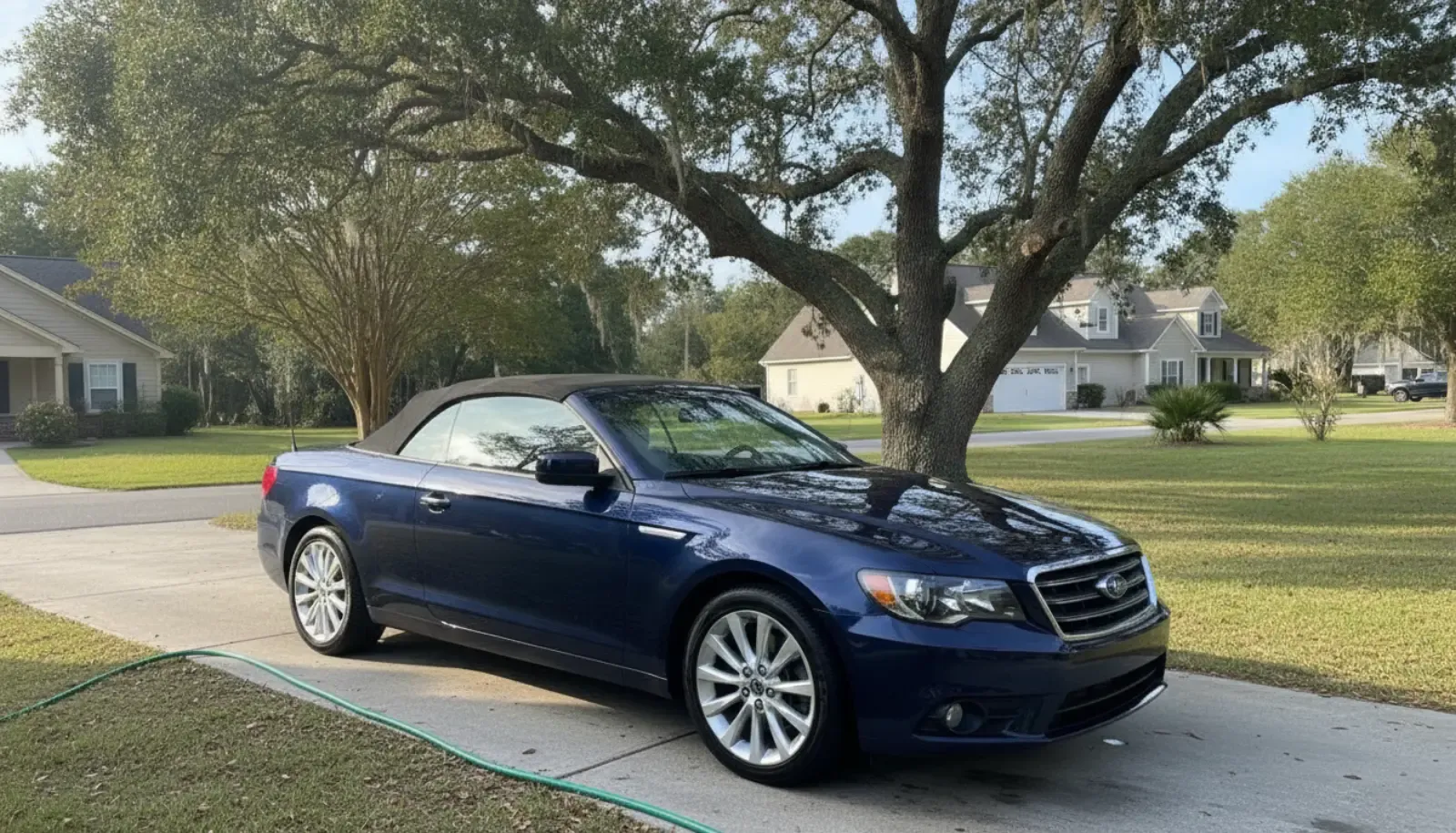
Here is how to clean convertible car exterior panels without forcing water into the roof. Keep the top fully raised and latched. Rinse loose grit off the roof first. Wash the roof with a cleaner made for that material. Then wash the painted body, trim, and rear window. Let the top dry completely before you lower it. That order matters more on a convertible than on a fixed-roof car. A soft top, its seams, and a plastic rear window can be marked by a brush, pressure, or cleaner that is fine on paint.
Request a free detailing quote
How to Clean a Convertible Car Exterior Without Guessing
Start by naming the roof you actually have. A fabric top looks matte and canvas-like. A vinyl top looks smoother, more like leather or plastic. A removable hardtop is painted metal or a composite panel, closer to the rest of the body. If you are unsure, check the owner's manual before you buy a cleaner. A water-drop test is only a clue: a drop that soaks in often means fabric, while a drop that smears often means vinyl.
The rear window is a separate material. Many soft tops use a clear plastic panel that folds. Others use glass. Glass can take a normal glass cleaner if you keep that cleaner off the fabric or vinyl around it. Plastic scratches from paper towels, stiff brushes, and ammonia. Treat the window only after you know which one you have.
Also look at the condition before you wash. Frayed stitching, a loose seal, a tear, or a window that is already cloudy should change the plan. A gentle hand wash will not repair those. It can push water through a weak seam. If the top is damaged, skip automatic washes and strong spray until the material is repaired.
KD Mobile Rinse and Shine cleans and polishes vehicles at the owner's location in Hardeeville. A convertible is still a detailing job, not a different service line. Share the roof type, the window type, and what you want addressed so the visit matches the car.
Set Up the Wash Before Water Hits the Roof
Park in the shade and let the panels cool. Hot paint and a hot top make soap dry in streaks, and dried cleaner is harder to rinse out of a weave or a seam. Close the top, latch it, and raise the side windows. An unlatched roof can shift while you scrub, and an open window gives rinse water a path into the cabin.
Vacuum loose debris off a fabric top with a soft brush attachment before it gets wet. Pollen, leaves, and cottonwood fuzz sit in the weave. If you wash first, that grit becomes mud and gets worked deeper. Skip the vacuum on a plastic rear window. The attachment can scuff it.
Set out separate tools:
- Two buckets, one with car-wash soap and one with clean rinse water.
- A soft wash mitt or sponge reserved for paint.
- A soft brush for the roof only, one you can drag across the back of your hand without scratching skin.
- Clean microfiber towels for paint, glass, and the rear window. Do not share them with wheels.
- A separate wheel brush and wheel cleaner, kept away from the body and the top.
Read the cleaner label. Fabric and vinyl often need different products. Avoid bleach, ammonia, alcohol, and household vinegar on the top. Avoid dish soap as your regular wash. Test any unfamiliar top cleaner on a small hidden spot and wait until it dries before you treat the whole roof. Do not mix cleaners, and keep products away from children and pets.
Rinse and Wash the Roof Before the Painted Body
Rinse the top with a gentle stream, not a close pressure-washer jet. Ford's convertible-top guidance warns that high-pressure or wand-style spray against the top and windows can cause leaks and seal damage. Hold the hose back and let water sheet across the fabric or vinyl. Work from the high point of the roof toward the side rails so grit moves off the car instead of into a seam.
Wash the roof before you wash the hood, doors, and quarters. A dirty mitt from the lower body will grind road film into the top. Use a convertible-top cleaner when the label matches your material. A plain car-wash soap is the fallback for light dust if the manual allows it. Apply the cleaner, then agitate in short, straight strokes. On fabric, a soft brush lifts dirt from the weave. On vinyl, a soft cloth is safer than a stiff brush, which can dull the surface.
Do one area, then rinse that area. Do not let soap dry on the top. Dried soap leaves a film that holds dust. Rinse until the water runs clear and no suds sit in the weave, along the header, or where the top meets the rear deck. A second rinse is worth the time. Leftover cleaner is a common reason a dark top looks blotchy the next day.
Save the painted body for after the roof is rinsed clean. Wash from the top of the doors downward, one panel at a time, and rinse the mitt in the clean bucket often. The two-bucket idea is the same one used in a normal home detail, which is covered in the home detailing guide. On a convertible, do not reuse that guide's roof-to-rocker pass on the soft top itself. The top already had its own gentler wash.
Dry the paint with a clean microfiber towel so water spots do not form. Do not use that same towel to scrub the top dry. A fabric roof should air-dry. Blotting a vinyl top with a clean towel is fine if you are only lifting standing water, not grinding it.
Clean Seams, Trim, and the Rear Window on Purpose
Seams fail when water is forced into them. After the open panels of the top are clean, look where water likes to sit. Check the stitching lines. Check the channel where the top meets the side window. Check the header above the windshield and the seal at the rear deck. Rinse these with low pressure. If grit remains, use the soft roof brush and a little cleaner, then rinse again. Do not pry a seal open with a tool, and do not aim a jet into a fold.
Exterior trim needs the same patience. Plastic window surrounds, rubber seals, and bright metal moldings collect wax and road film. Wipe them with a damp microfiber and a cleaner labeled safe for that piece. Keep paint wax and tire dressing off the top. CarGurus notes that wax made for painted metal can discolor a convertible top and can be hard to remove. Ford also warns that hot wax from a commercial wash can affect how cleanable the top material stays.
The rear window comes last so roof runoff does not dirty it again.
- Glass: use a glass cleaner on a clean microfiber, and wipe the surrounding fabric or vinyl first so the cleaner does not wick into it.
- Plastic: skip paper towels, ammonia, and glass cleaner unless the label says it is safe for plastic. Rinse, then wipe in one direction with a damp microfiber, turning to a clean face often.
- If the plastic is only lightly hazed, a plastic-safe polish used on the towel, not sprayed wildly onto the fabric, is the usual next step. Stop if the panel is cracked or deeply scratched. Polish will not fix that.
Open the doors and check the sill seals after the rinse. Water that crept past a window seal should be blotted out of the cabin before it dries. That check takes a minute and tells you whether the next wash should be even gentler.
Choose a Wash Method That Respects the Top
People also ask whether a soft top can go through a car wash. The careful answer is: sometimes, if the top is healthy, fully latched, and the wash is mild. It is not the best default. A hand wash lets you keep pressure off the seams and keep the wrong chemicals off the roof.
| Method | When it can fit | What to avoid |
|---|---|---|
| Hand wash at home. | Routine dirt on fabric, vinyl, or a hardtop. | Stiff brushes and harsh chemicals. |
| Touchless or soft-cloth wash. | A latched top in good condition. | Hot-wax cycles and stiff brushes. |
| High-pressure wand wash. | Rarely a good fit for a soft top. | Spray into seals or the rear window. |
| Mobile hand wash. | Work done in your driveway. | Assuming a soft-top treatment is included. |
If you do use an automatic wash, keep the roof up and latched, skip the hot-wax option, and do not choose a high-pressure setting aimed at the top. A plastic rear window is the weak piece in many older soft tops, because rollers can scuff it. A damaged or soaking top should stay out of the machine until it is repaired and dry.
For a wider look at wash types without the convertible-specific steps, read car wash options. Use that article to compare a quick wash with a deeper detail. Use this one to decide how the roof itself should be handled.
Let the Top Dry Before You Lower It
Leave the top up until it is fully dry. Ford's guidance is direct: never lower and stow a wet convertible top, because that can permanently discolor the material. A damp fold also holds dirt in the crease. In humid weather, drying can take longer than the paint. Do not rush it with a heater on high aimed at a plastic window, which can warp the panel.
Once the top is dry, you can talk about protection as a separate step, not as part of the wash. Fabric tops are often treated with a water-repellent product made for that cloth. Vinyl tops are often treated with a vinyl protectant. Neither product belongs on the painted body, and paint wax does not belong on the cloth. Read the label, test a hidden spot, and do not coat the rear window unless the product says it is safe there.
Protection is maintenance, not a promise that the top will never leak or stain. Tree sap, bird droppings, and pollen still need a prompt rinse. If a spot has already set, clean the whole top rather than scrubbing one circle, or the cleaned patch can look lighter than the rest.
Polishing the painted panels is also a later decision. A clean exterior is the prep. Polish and paint protection are covered in the paint protection guide. Do not polish up to the edge of a soft top, and mask the roof if a product might sling onto it.
Know When a Driveway Wash Is the Wrong Job
Handle a light film of dust yourself if you have the right cleaner, shade, and time to let the top dry. Stop and get a second look when you see any of these:
- Green or black growth in the weave that does not lift with a soft brush.
- A seam or rear window that weeps water into the cabin during a gentle rinse.
- Stains from sap, dye transfer, or mildew that would need a stronger chemical than a normal car-wash soap.
- A plastic window that is yellow, cracked, or scratched enough that household wiping makes it worse.
- No shade, no time to dry the top fully, or no place to keep rinse water off storm drains in a thoughtful way.
Stronger chemicals and machine polishing are not part of a basic exterior wash. Confirm what a visit includes before you book one. Mobile auto detailing at KD is vehicle cleaning and polishing at your location, with the exact work agreed before the visit. It is not a published soft-top restoration package, and it is not a promise of a like-new roof.
If you would rather not manage the roof, seams, and dry time yourself, review the services and ask for a quote that names the convertible and the job location.
Ask for a Mobile Exterior Wash in Hardeeville
KD Mobile Rinse and Shine brings auto detailing to the vehicle in Hardeeville, South Carolina. There is no walk-in shop. A free quote starts with a message, a call, or an email. It is not an instant price and it is not a confirmed appointment.
In the message, include:
- The vehicle year and model, plus whether the roof is fabric, vinyl, or a hardtop.
- Whether the rear window is plastic or glass, and any stains, leaks, or damage you can see.
- What you want done: a cautious exterior clean, interior work as well, or polishing discussed separately.
- The Hardeeville location, how to reach the car, and whether shade and a water source are available.
Call 443-239-1200 or use the contact form. You can also email kdmobilerinseandshine\@gmail.com. Kyle Douglas is the Hardeeville contact. Share the condition and the location first so the quote covers the car you have, not a generic sedan.
Frequently Asked Questions
How do I wash my convertible top?
Latch the top, vacuum loose debris if it is fabric, and rinse with a gentle stream. Wash with a cleaner made for fabric or vinyl, agitate with a soft brush or cloth, and rinse until no soap remains. Let the top dry fully before you fold it. Check the owner's manual before using a new product.
Should you take a soft top convertible through a car wash?
A mild touchless or soft-cloth wash can be acceptable when the top is latched and in good shape. Skip hot wax and high-pressure jets aimed at seams and the rear window. Hand washing is the safer routine. Do not use an automatic wash on a torn or soaking top, and do not stow the top while it is wet.
What is the best cleaner for plastic windows?
Use a plastic-safe cleaner or a light plastic polish on a clean microfiber towel, not a paper towel. Avoid ammonia, which can cloud vinyl and plastic. Do not scrub the plastic with the brush you used on the fabric roof. If the panel is cracked or deeply yellow, cleaning will not make it clear again.
How to clean car plastic exterior?
Rinse first, then wipe exterior plastic trim with a damp microfiber and a cleaner labeled for that plastic. Keep bleach, harsh solvents, and tire dressing off painted edges and off the convertible top. Test a hidden spot if the product is new. Seams next to the trim should be rinsed gently, not blasted.
Can I lower the top to wash the folds?
No. Wash and dry the top while it is up and latched. Folding a wet top can discolor the material and trap dirt in the crease. If you need the inner folds cleaned, ask a detailer to confirm a safe method for your car rather than forcing the mechanism mid-wash.